Full Signal: Listening for Change Inside an Industrial Sea
2025-12-02


The Thelma Biotel Team
A close look at how fish and sharks navigate fast-growing industrial seascapes.
Estimated reading time: 10 minutes
Field Site: Saint-Nazaire Offshore Wind Farm, France
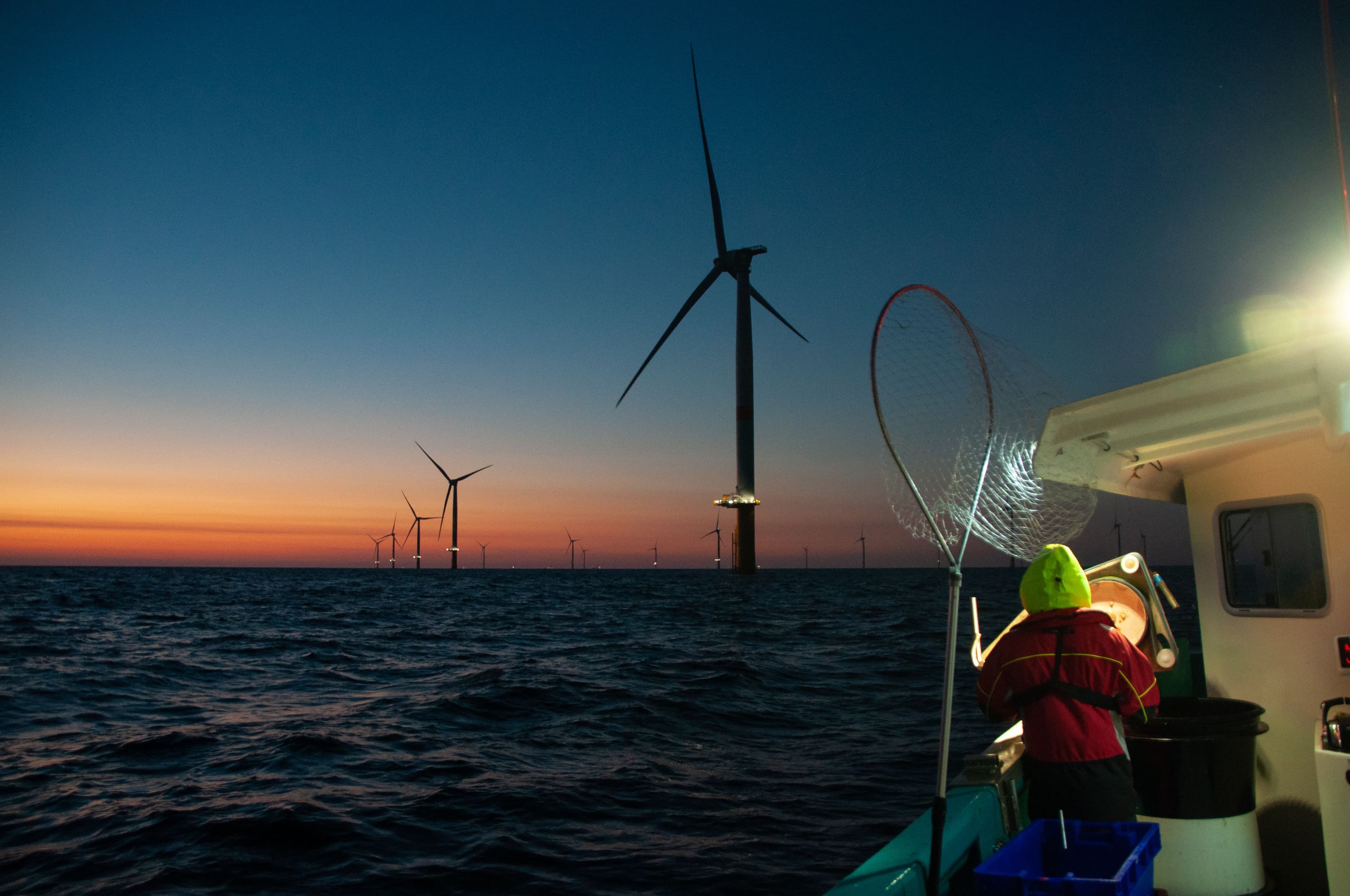
The first thing you notice is the movement. Maintenance vessels weave between the turbines, cranes swing across platforms and the hum of machinery blends with waves hitting steel. The blades turn overhead with a rhythm that feels almost tidal. For marine ecologist Dr. Lydie Couturier, the Saint-Nazaire wind farm is no quiet field station — it is a working industrial landscape where science has to unfold between schedules, safety rules and the constant motion of the sea.
“It is always busy out here,” Lydie says. “You are working in an active workplace, not a quiet field site. There is a lot happening around you all the time.”
This is the backdrop for her research: uncovering what happens beneath the surface of a wind farm that never stands still.
#1 The Question: How do marine animals behave inside an active offshore wind farm?
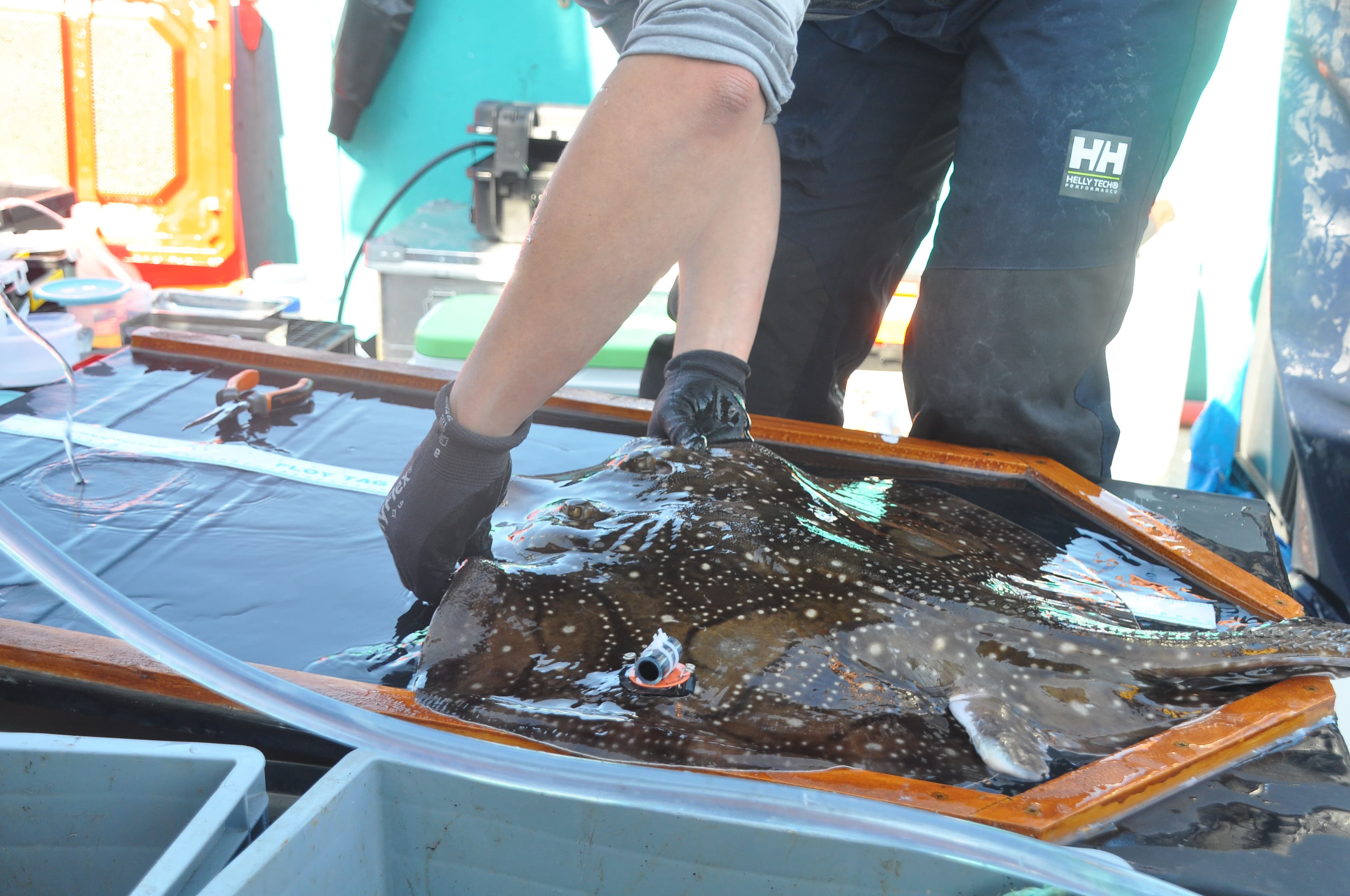
Europe’s offshore wind sector is expanding fast, creating vast industrial seascapes where turbines, cables and vessel traffic reshape the underwater world. Yet one part remains largely invisible – how fish and sharks actually move through these structures over days, months and seasons.
Lydie Couturier and her team set out to change this. By tagging animals directly inside the Saint-Nazaire wind farm, they aimed to build one of the first behavioural maps of life inside this industrial ecosystem.
#2 The Field Method: Doing Science in a Working Power Plant
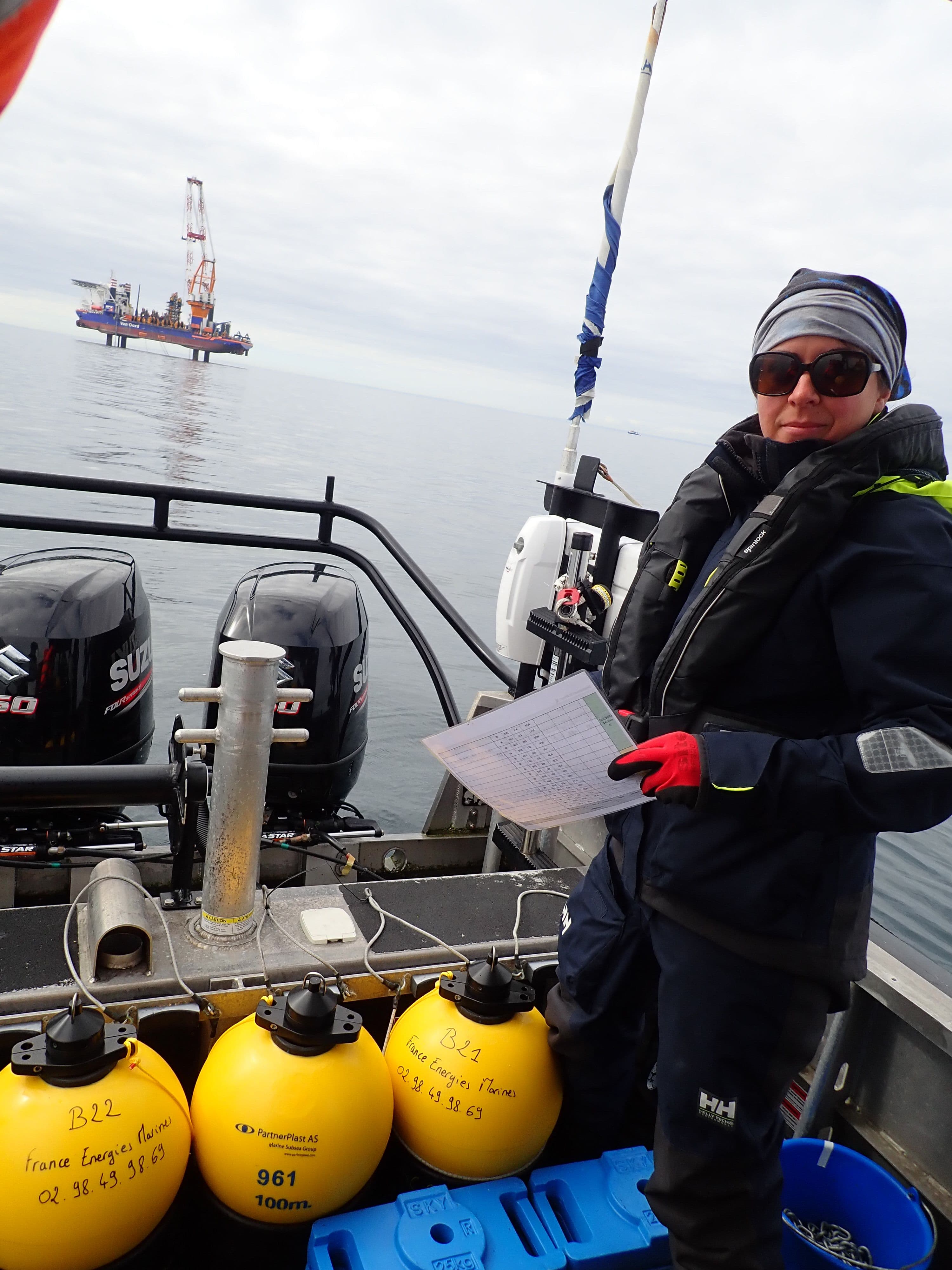
The wind farm is never still. Blades rotate, crew vessels shuttle between platforms, cranes swing across decks and underwater noise fills the water column. This is not a quiet field station – it’s a workplace governed by schedules, safety rules and constant movement.
What teams must coordinate before a single receiver enters the water:
- access controlled by the wind farm operator
- working around sound interference, currents and vessel traffic
- weather-dependent windows for deployment
- synchronising boats, equipment and personnel
- securing gear in a high-energy environment
#3 The Tools: Designing an Acoustic Array in a Wind Farm
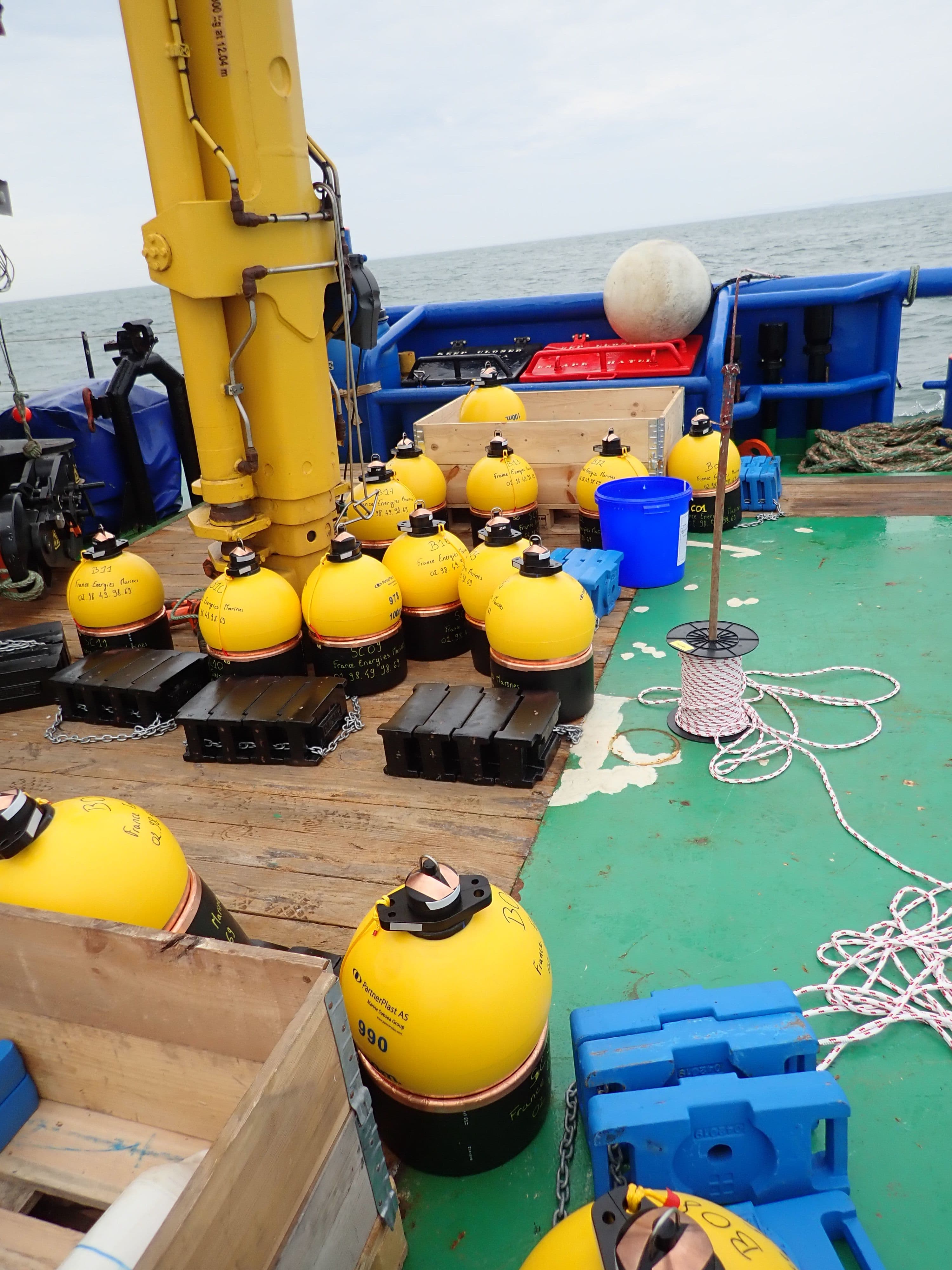
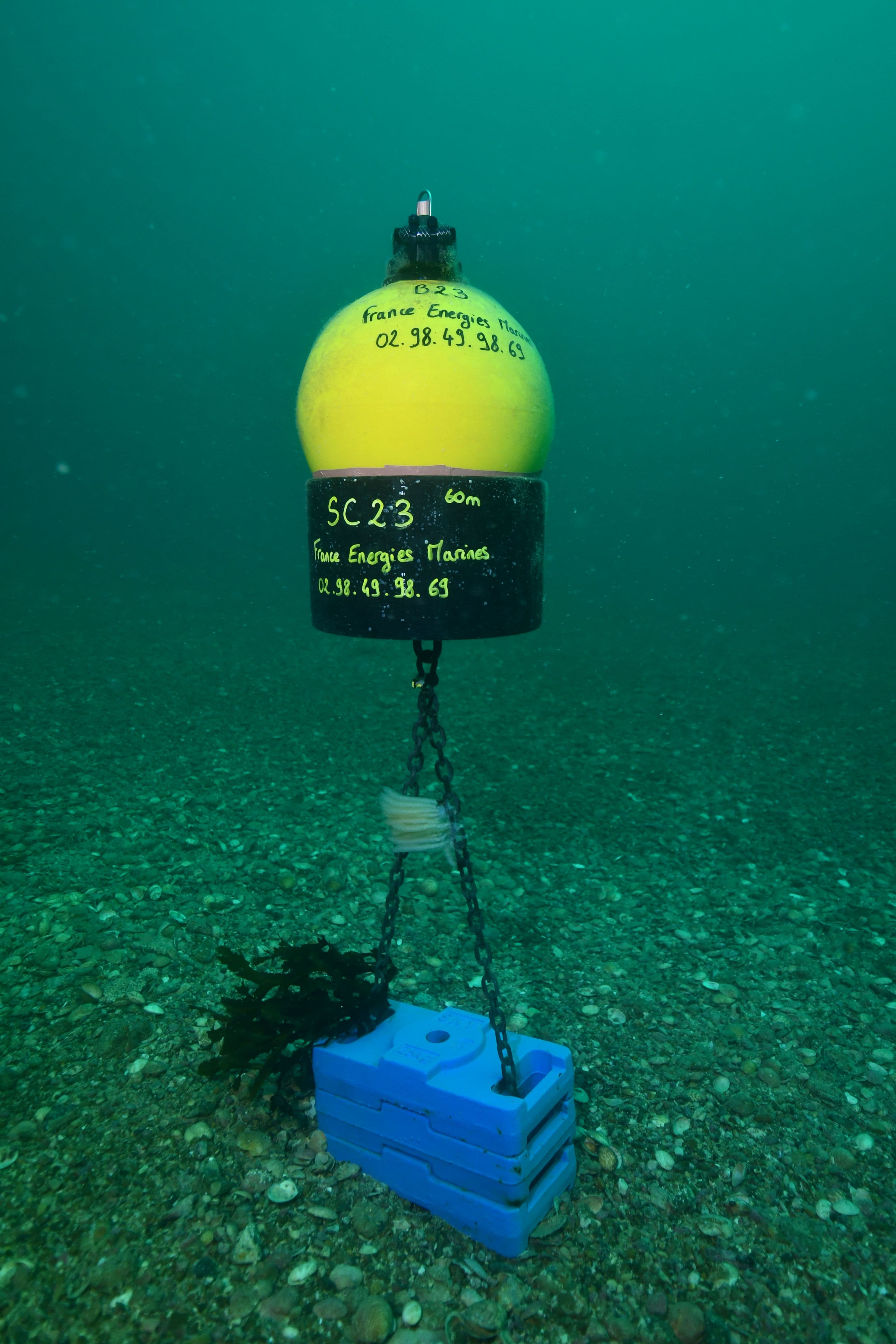
Deploying receivers inside a wind farm is very different from placing them along a calm coastline. Turbines alter sound propagation. The turbine foundations shift the currents. Cables add continuous low-frequency hum. To capture movement inside this engineered seascape, the acoustic array must function within these physical and acoustic constraints.
Offshore-specific challenges when designing an array:
- detection ranges altered by turbine noise and sound scattering
- mixed substrate that affects anchoring
- vessel traffic and ongoing maintenance activities
- storms and shifting seabed conditions
- access windows set by weather and operator permissions
The result is an underwater listening grid capable of tracking movement through a noisy, structured environment.
#4 Tagging in Motion: Fieldwork at its most dynamic.
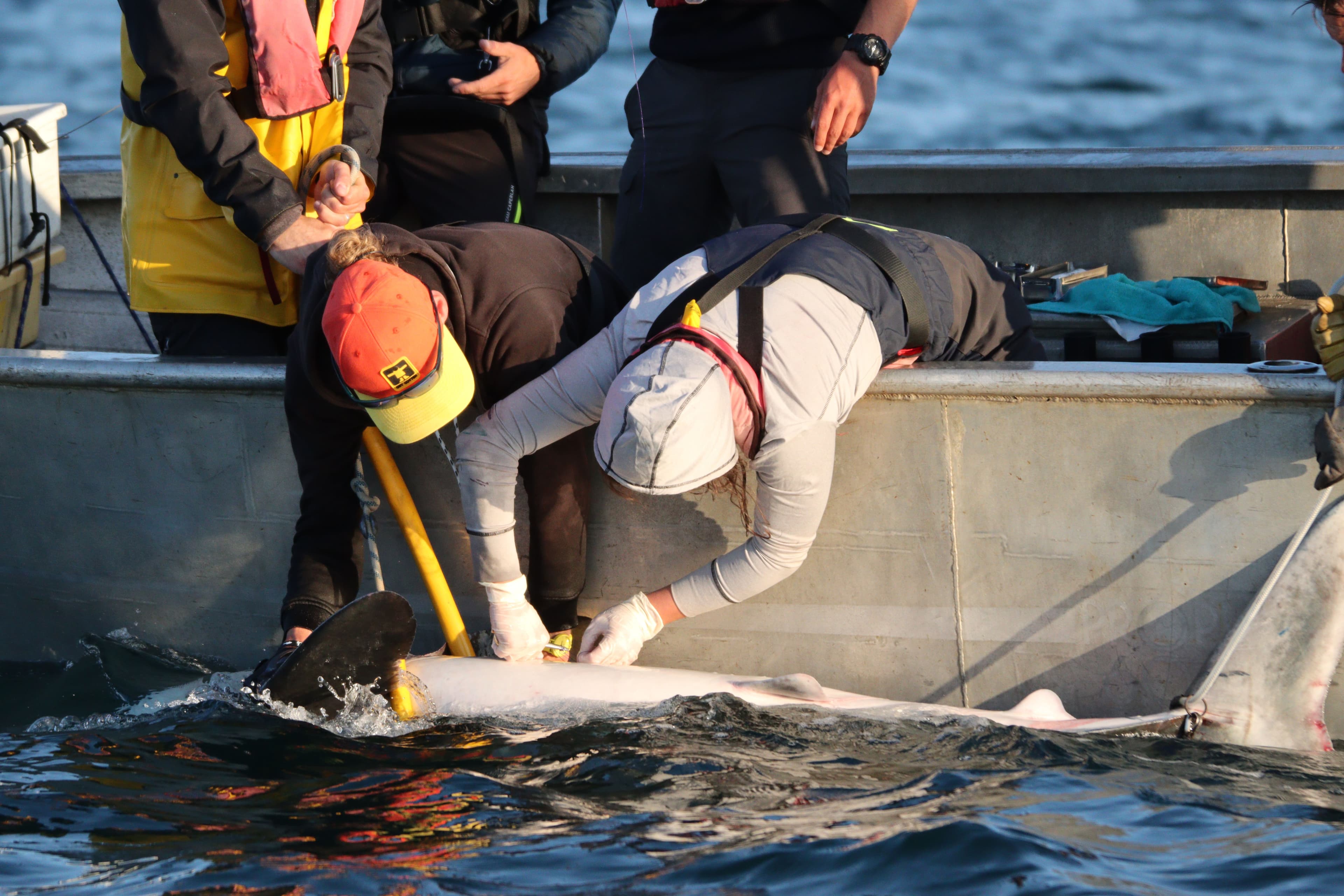
Tagging at sea is never predictable. “It is one thing to plan a tagging session on paper and another to do it offshore,” Lydie says. “The boat is moving, the weather can turn fast, and you have to work within the safety rules of an industrial site. Even catching the fish is unpredictable. You do the best preparation you can, but out here the sea decides what is possible.”
Tagging inside a wind farm has a clear purpose: to follow individual animals through this industrial seascape over days, weeks and seasons. Each species adds a different piece to that ecological picture:
- Dogfish show whether turbines act as long-term habitat
- Pollack and sea bass reveal how predators use scour protection
- Porbeagle sharks indicate whether turbines influence migration or foraging stops
Working offshore means every step must happen safely and quickly on a moving deck in shifting conditions. Lydie considers several elements essential for successful tagging:
- preparing the full tagging setup in advance
- coordinating closely with fishermen to target the right species
- keeping handling times as short as possible
- adapting to weather and vessel movement in real time
- ensuring the tagging team works seamlessly together
After the final fish is released, the receivers take over — listening quietly for months while the team waits for the first detections.
#5 The Insights: What Telemetry Makes Visible
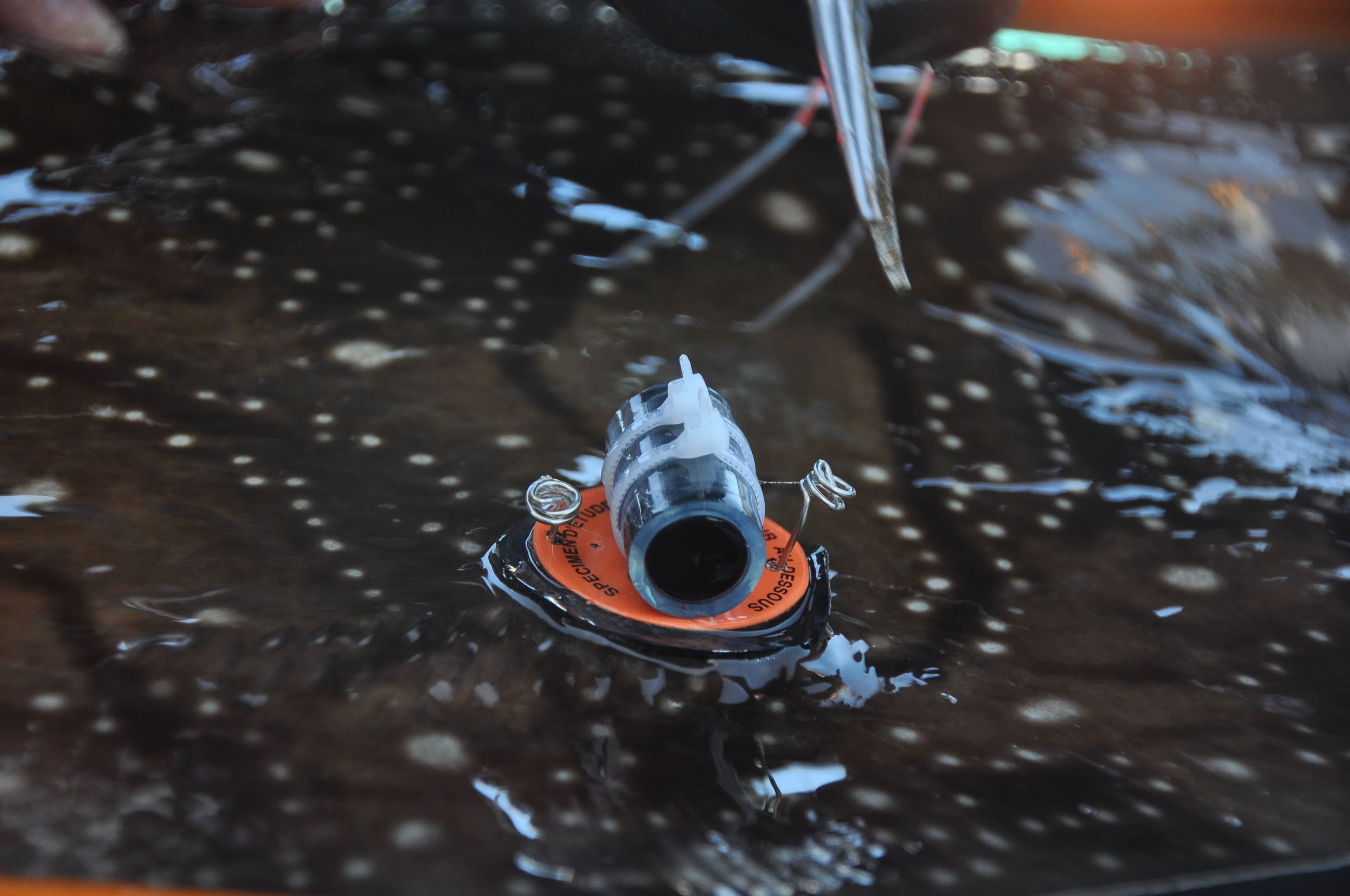
When receivers resurface, they carry thousands of detections: movement routes, return visits, seasonal shifts and the use of specific structures. “There is always a moment of suspense when you open it,” Lydie says. “You know something has been happening down there, but you don’t know what you’ll find until you see the first detections.”
Once analysed, the data reveals clear patterns – where animals stay, how they move and how they respond to the turbine field. Telemetry turns these behaviours into maps that managers, scientists and fishermen can read at a glance. As Lydie says: when behaviour becomes visible, the conversation changes.
Ecological Insights
Telemetry reveals behaviour traditional surveys cannot capture:
- which species stay and which simply pass through
- how turbine foundations shape habitat use
- where predators hunt and prey cluster
- how behaviour shifts across seasons
- how animals move between natural and turbine habitats
Case: Dogfish in Saint-Nazaire (Canicula Study)
Many individuals returned repeatedly to the same foundations and stayed for long periods – treating the wind farm as a reef-like habitat.
Fisheries Insights
Wind farms reshape human activity too. Telemetry helps visualise the changes of fishing grounds:
- how accessible areas shift
- where commercially relevant species gather
- how foundations act as de facto refuges
- how catch patterns change across seasons
- improved detection of illegal or destructive fishing
Case: Atlantic Cod in the Dutch North Sea
Cod consistently used scour protection as shelter, staying close to turbines. These areas face less fishing pressure and often show higher cod numbers.
Telemetry can turn these patterns into intuitive visuals. When Lydie shows detection maps on board, fishermen immediately recognise seasonal behaviours they know from experience – and often point out what might happen at the next turbine or later in the year. That exchange creates a shared, evidence-based understanding of how wind farms and fisheries interact.
Monitoring the Energy Transition Underwater.
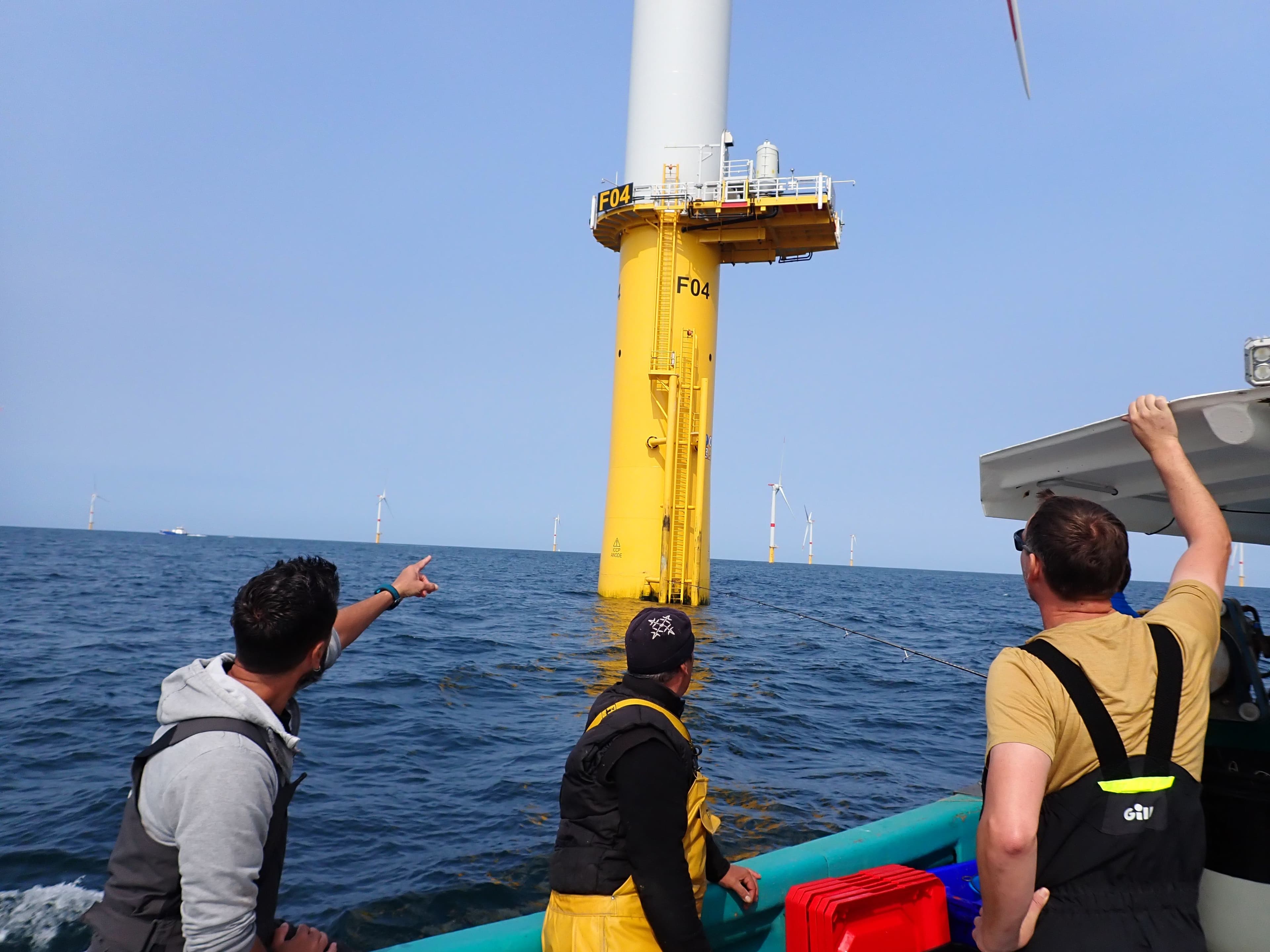
Europe plans over 300 GW of offshore wind capacity by the mid-2030s. Entire regions will become engineered seascapes above and below the surface, making continuous, high-resolution behavioural data essential for guiding policy and safeguarding ecosystems. As Lydie puts it: “If we want to understand the impact of offshore wind, we need to follow the animals, not just the structures.”
In an era of multi-billion-euro expansion and rapidly shifting marine landscapes, telemetry provides the clarity needed by policymakers, conservationists and fishing communities alike.
Scaling up now means moving from single-site studies to regional networks. Projects like FISHOWF+f+ and NorTrack link receivers across coastlines and countries, turning local detections into broader maps of movement and connectivity. This is the future of monitoring Europe’s energy transition underwater.
Researcher
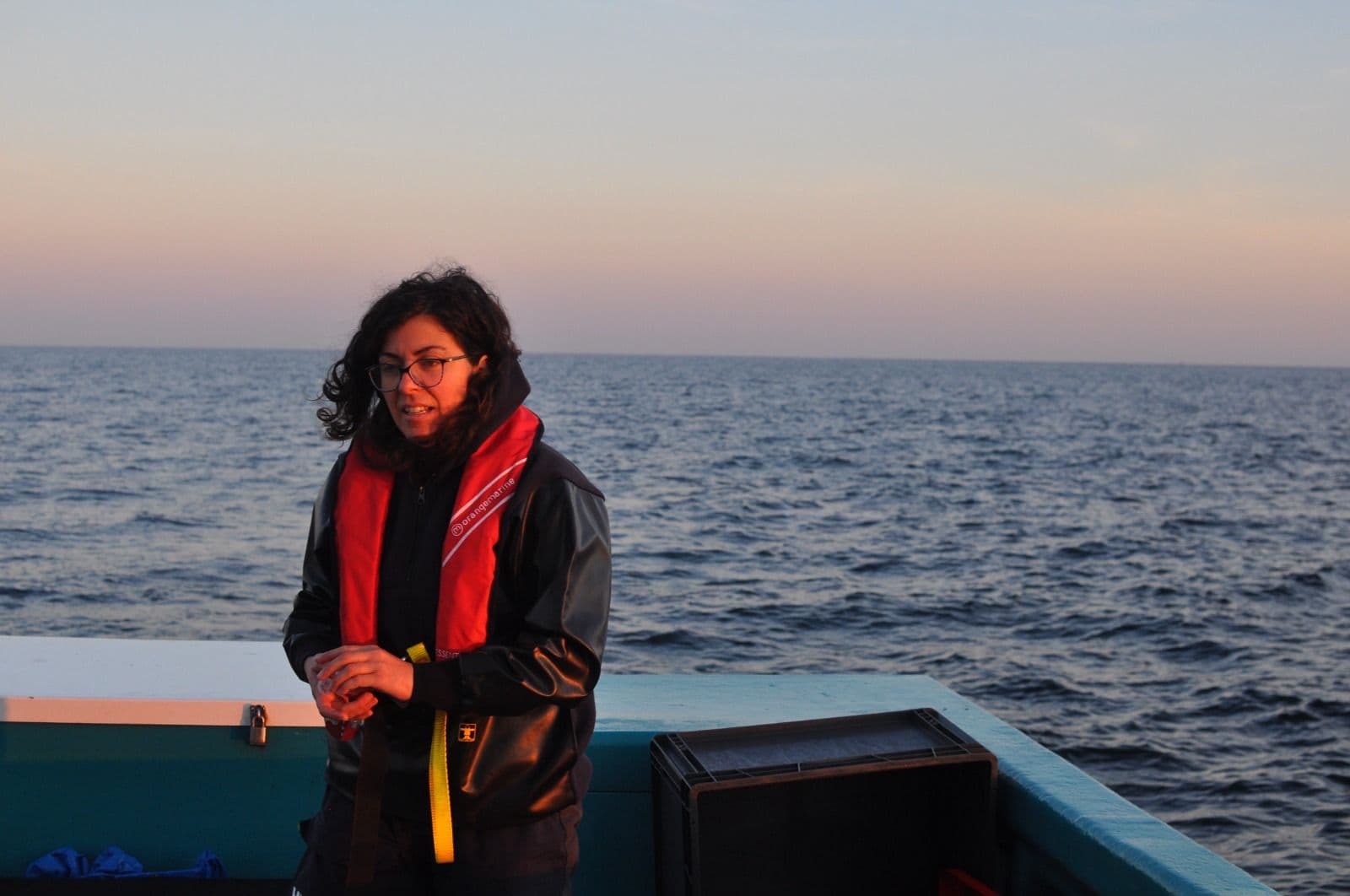
Dr. Lydie Couturier
Marine ecologist specialising in behaviour, movement ecology and human–ocean interactions. Her work focuses on acoustic telemetry, habitat use in dynamic environments and the design of cross-disciplinary monitoring approaches in offshore environments.
(Links to ResearchGate and LinkedIn)
Thelma Biotel’s Role
This study used Thelma Biotel’s acoustic receivers and tags to monitor species behaviour inside the wind farm. The long-term deployments enabled fine-scale insights in one of Europe’s busiest and most acoustically complex marine workplaces.