Study Spotlight: When rivers are managed, fish still migrate
2026-09-08


The Thelma Biotel Team
What fish movement reveals in one of the world’s most engineered freshwater landscapes
estimated reading time ~ 7 minutes
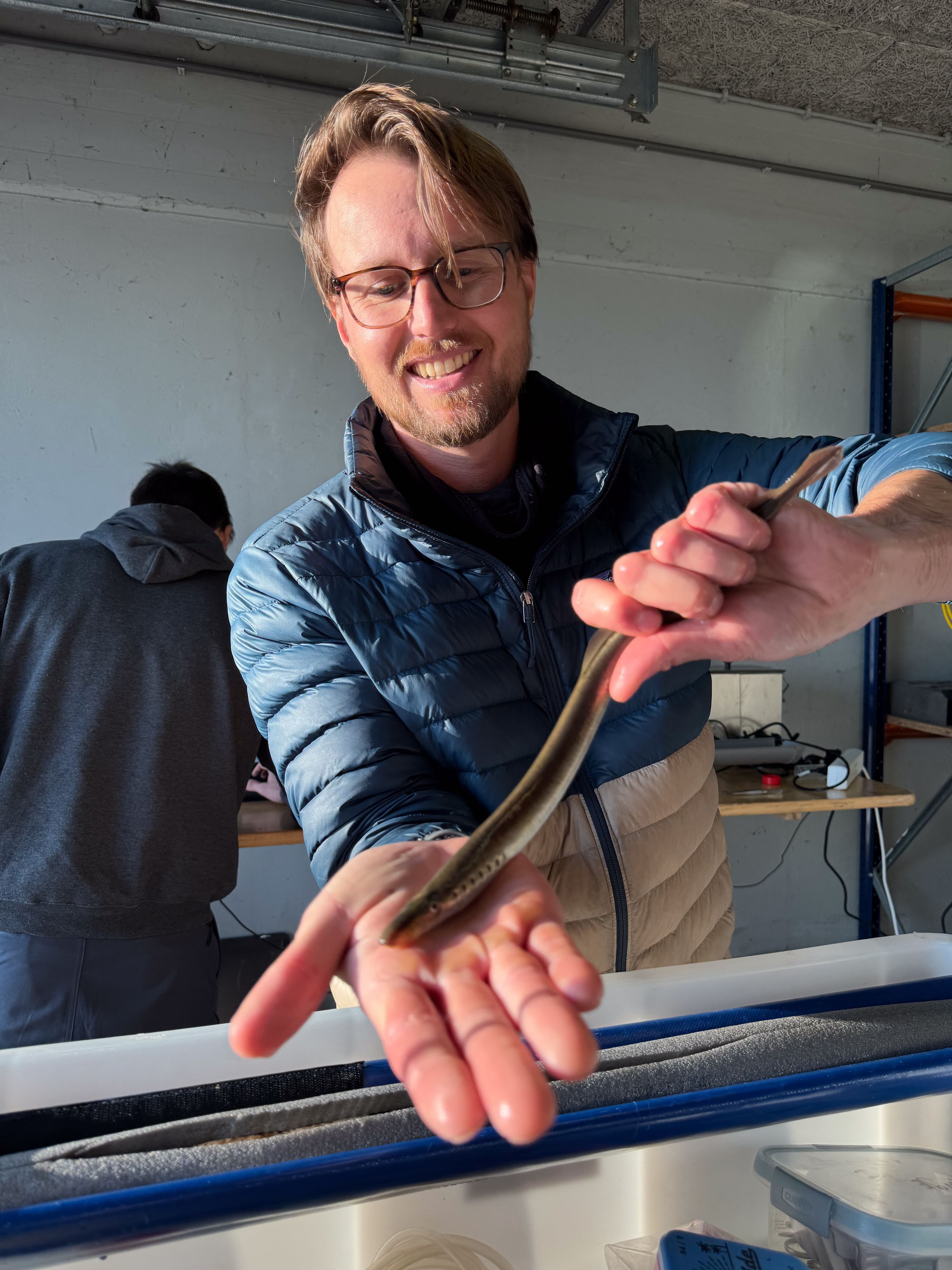
Jimmy van Rijn handling a rare river lamprey during tagging ©drtwanstoffers
When fish move through engineered landscapes
Few countries have altered their freshwater systems as extensively as the Netherlands. Rivers, canals, floodplains are shaped by a dense network of pumps, sluices and weirs designed to regulate water levels, protect land, and support agriculture and navigation. From a human perspective, this landscape represents one of the most advanced water management systems in the world.
For migratory fish, it is one of the most demanding.
Seasonal movement remains essential for many freshwater species, yet the rivers they depend on are no longer governed by natural flow alone. Connectivity is determined by daily operational decisions. Pumps are switched on and off, barriers are adjusted, and discharge is redistributed across the system. Whether a river is passable can change within hours.
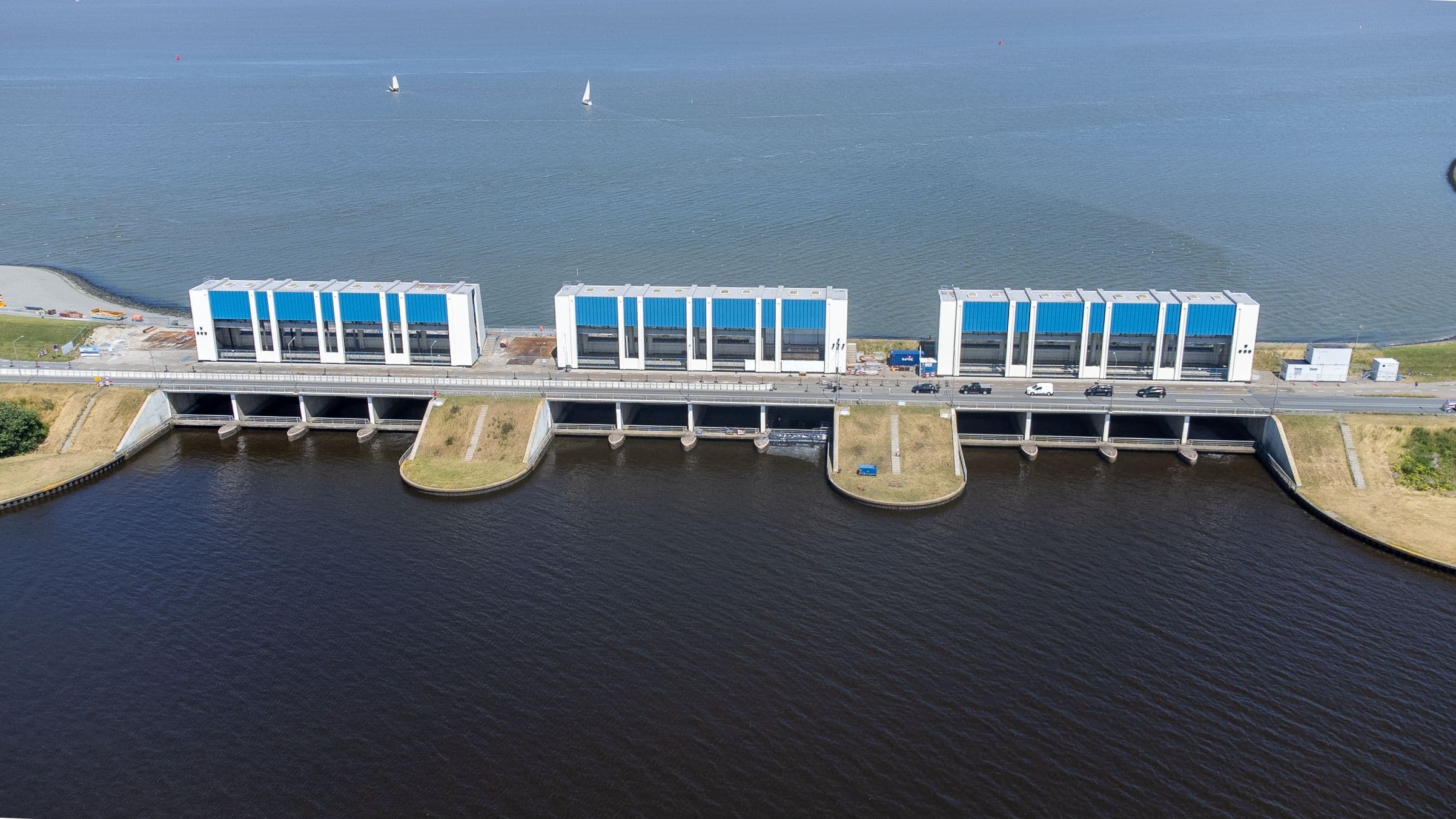
One of over 2000 sluices in The Netherlands through which various fish species may migrate or may attempt to. ©rvbenemanuel
River lamprey move through this landscape without the ability to jump, sprint through strong currents, or bypass obstacles. Their upstream migration depends on continuous pathways and precise environmental cues. When movement is delayed or disrupted, it becomes visible immediately in their behaviour.
By following river lamprey through managed Dutch rivers, this study examines what connectivity actually looks like in one of the most engineered freshwater landscapes on Earth, seen from the perspective of a migrating fish.
Doing movement ecology where rivers are operated
This study is part of a broader programme of applied freshwater research led by Jimmy van Rijn and his colleagues at the Van Hall Larenstein University of Applied Sciences. His work focuses on how fish move through regulated rivers and how that movement is shaped by infrastructure and day-to-day water management.
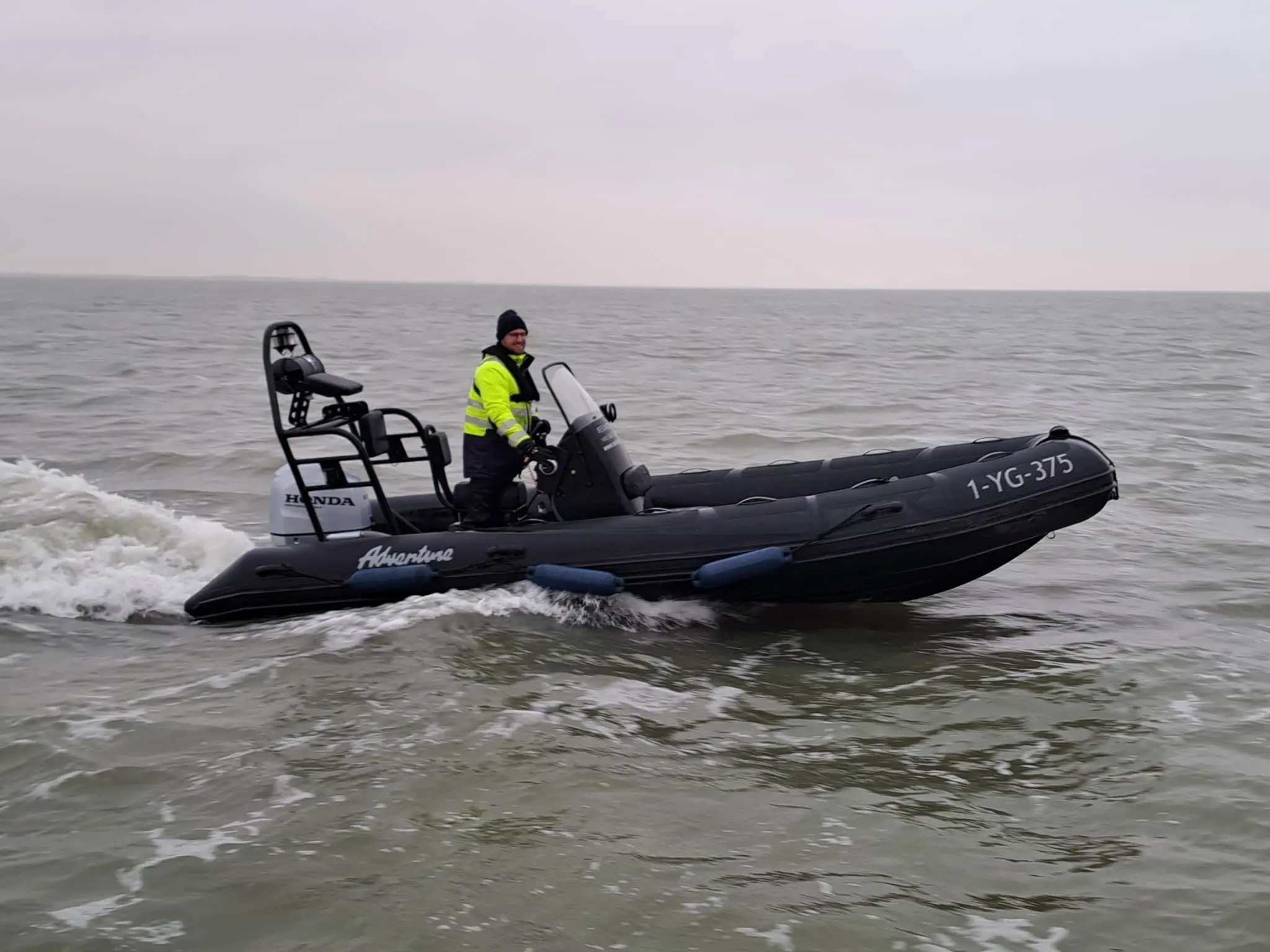
Jimmy van Rijn and his colleagues during a field work campaign to investigate fish migrations in Dutch waters. ©Tamme Smit
Van Hall Larenstein works at the interface of science and practice, with research projects developed in close collaboration with regional water authorities and carried out in rivers and canals that are actively regulated rather than idealised reference systems. The central question is not whether rivers can function ecologically in theory, but how fish respond under the conditions that actually exist.
“We are working in systems that are managed all the time,” Jimmy explains. “So the question is how fish behave in the situation that is really there.”
For Jimmy, this applied focus is deliberate. Rather than producing results that remain abstract, he is motivated by research that can change how rivers are understood and managed.
“If you don’t look at what actually happens in these systems,” he says, “you can design things that work on paper, but not for the fish.”
This framing influences both the questions being asked and the tools used to answer them. Instead of relying on snapshot surveys or assumptions about movement, Jimmy’s work follows fish over time as they encounter barriers.
“What we are really interested in is behaviour,” he says. “Not only if a fish passes, but what happens before that. How long it takes, and whether it turns back.”
Within this wider research context, the river lamprey study forms one component of a long-running effort to understand freshwater connectivity in heavily modified river systems that are undergoing restoration.
A rare species makes connectivity impossible to ignore
River lamprey are among the most unusual fish found in European rivers. They are jawless, eel-like, and follow a life cycle that differs markedly from most other freshwater species. After growing at sea, adults migrate back into rivers to spawn, relying entirely on upstream movement to complete their life cycle.
They are also rare.
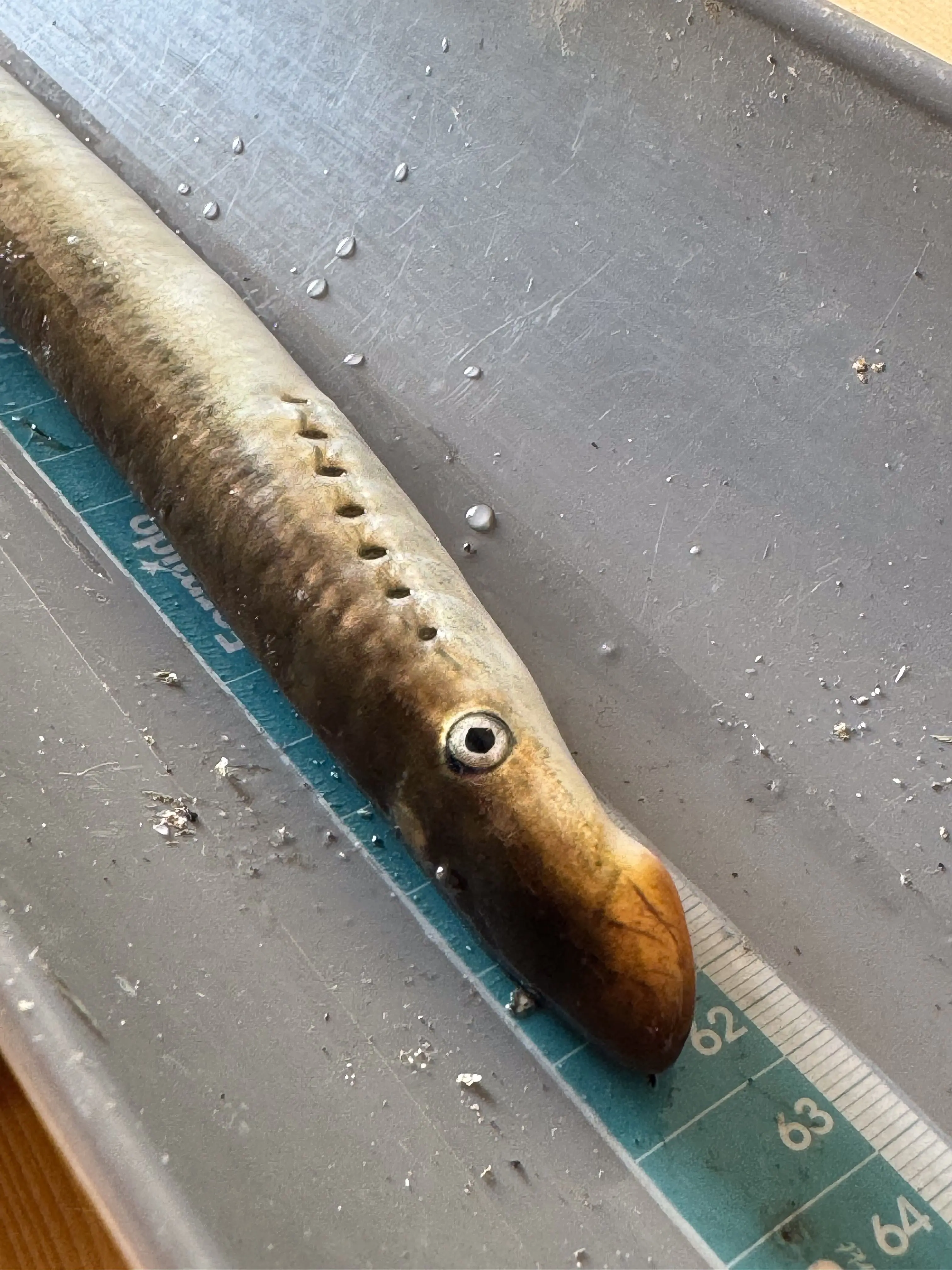
River lamprey with its characteristic 7 gill slits and round-shaped mouth. ©drtwanstoffers
In the Netherlands, river lamprey occur in low numbers and are legally protected. Their decline is closely linked to river fragmentation and the loss of longitudinal connectivity and spawning areas. For researchers working in heavily regulated river systems, this makes every successful migration event significant.
“They’re quite a strange fish,” Jimmy says. “They use pheromones to find their spawning grounds, so natural water flow is crucial in leading them to the right place. In our study area, there’s only one known spawning ground left. We knew lamprey were reaching it from the Eems, but no one had ever confirmed that movement from Lauwersoog, where our study starts. Yet they were occasionally caught farther upstream, so we knew they were going somewhere.”
Unlike salmonids, river lamprey cannot jump barriers or swim against strong velocities for extended periods. They move close to the riverbed and depend on suitable flow conditions and continuous pathways. Small drops, poorly aligned fish passages, or abrupt changes in flow can interrupt migration.
“If it doesn’t work, they don’t have many options,” Jimmy explains. “They can’t just force their way through.”
This makes river lamprey particularly informative in regulated rivers. Their behaviour reflects whether a river functions as a connected migration route under real operating conditions. When lamprey approach a structure and do not pass, those responses are visible directly in telemetry data.
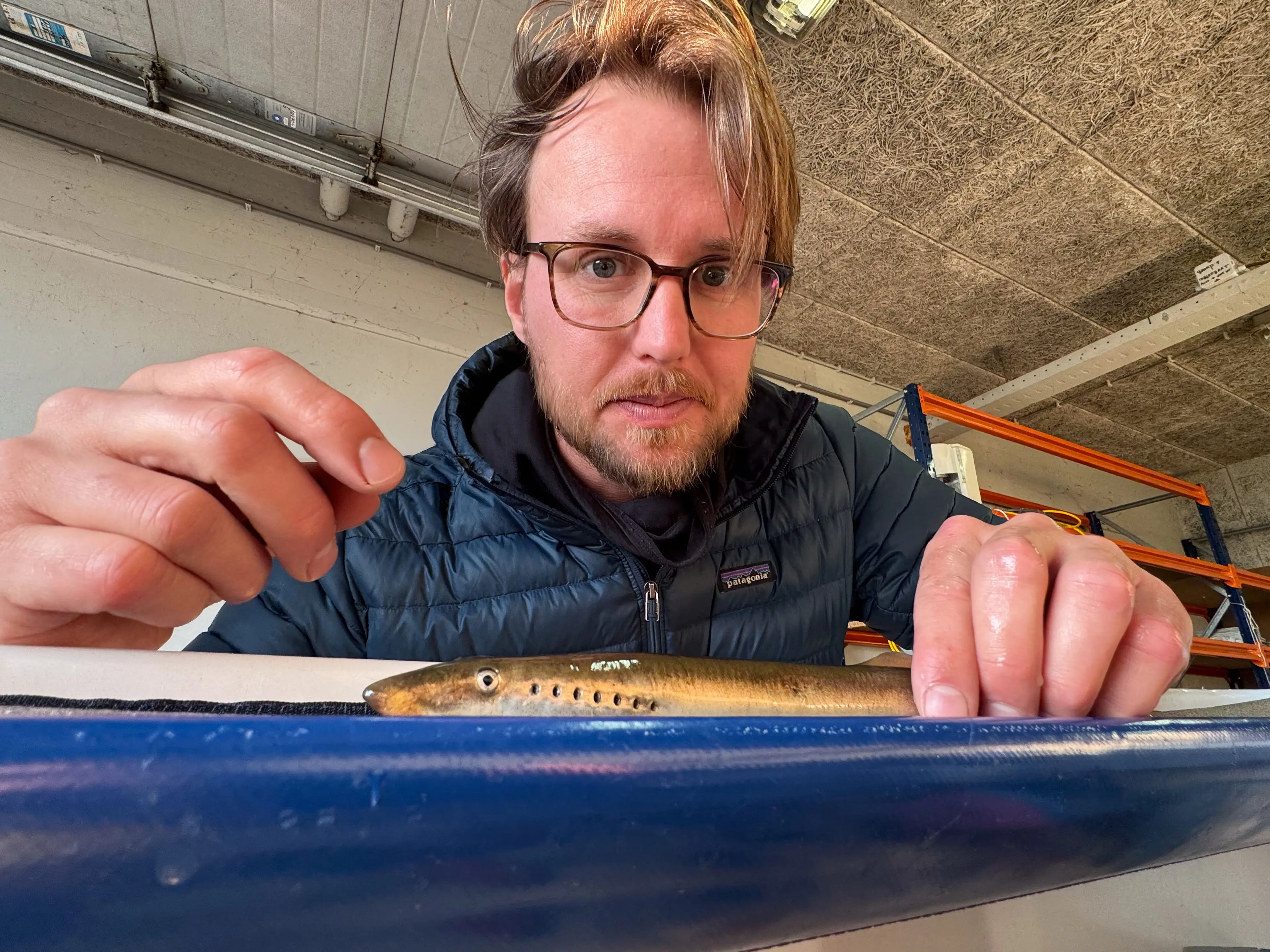
As part of a multi-institutional effort Jimmy van Rijn tags river lampreys with internal acoustic tags from Thelma Biotel ©drtwanstoffers
For Jimmy, this clarity is central to why the species plays such an important role in his research.
“With lamprey, you see very quickly whether something works or not,” he says.
By following river lamprey through managed rivers, the study captures a direct interaction between fish and infrastructure, offering a clear view of how connectivity functions in practice.
Following river lampreys through their choices
To study river lamprey movement in regulated rivers, the research relied on acoustic telemetry to follow individual fish over time rather than capturing single moments of passage.
Adult lamprey were tagged with small acoustic transmitters and released back into the river system. Receivers were placed upstream and downstream of selected structures, focusing on locations where movement decisions were most likely to occur.
“The important part is where you put your receivers,” Jimmy explains. “You want to see what happens when a fish reaches a structure, not just that it appeared somewhere upstream later.”
Instead of focusing only on whether lamprey eventually passed a barrier, the study tracked behaviour around infrastructure, including hesitation and delay. These patterns are difficult to detect with traditional monitoring methods, which typically record presence rather than movement dynamics.
“What telemetry gives you is the story before the result,” Jimmy says. “You don’t just see that a fish passed. You see everything that happened before that moment.”
Pings from farther than expected
One of the most important insights from the study was the scale at which river lamprey move through regulated river systems. Telemetry made it possible to follow individual fish beyond local passages and isolated structures, revealing movements that extended across connected waterways.
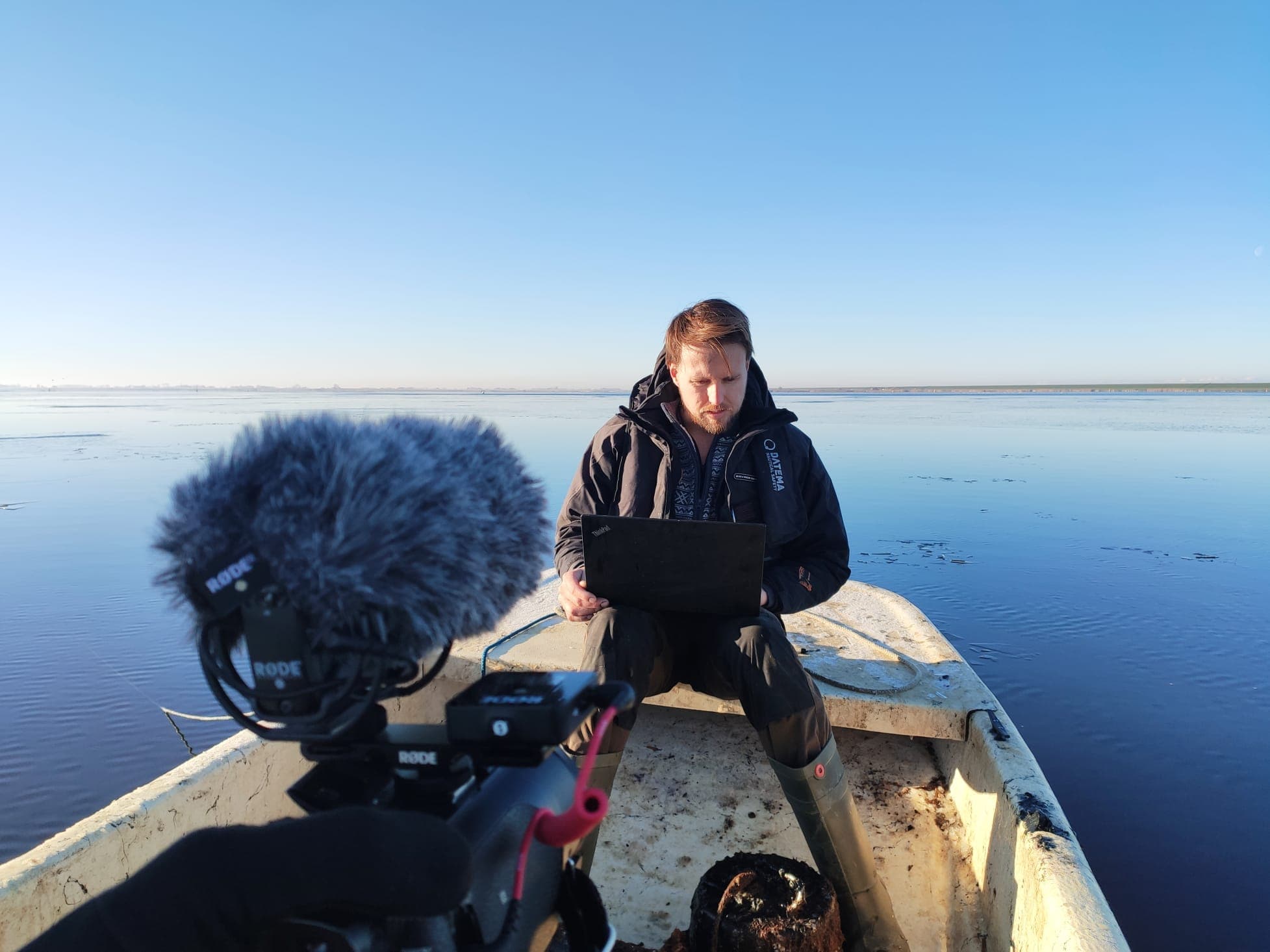
During regular data downloads of acoustic receivers Jimmy van Rijn discovers an interesting migration of a tagged river lamprey. ©Koen Moens
“For some of these fish, the distances they covered were really surprising,” Jimmy says. “You start seeing movement that you didn’t expect when you designed the study.”
One observation in particular stood out.
“In one case, we suddenly saw a detection coming from Belgium,” he says. “That was much farther than we expected.”
The detection was notable not because it represented a broader pattern, but because it revealed a connection that had not been assumed. A fish tagged within a managed Dutch river system was later detected across a national border, linking regions often treated as separate units in monitoring and management.
“That’s when it becomes exciting,” Jimmy explains. “You realise the fish are using the system in ways you didn’t anticipate.”
For Jimmy, moments like this are what make long-term telemetry work worthwhile. They show that movement is often more extensive and more complex than existing maps or management frameworks suggest.
Fish don’t stop at borders
The findings from this study highlight a central challenge for freshwater management in highly regulated landscapes: connectivity does not stop at individual structures, and it does not align neatly with administrative boundaries.
In systems like those in the Netherlands, rivers are often managed in segments. From the perspective of a migratory fish, however, these divisions do not exist.
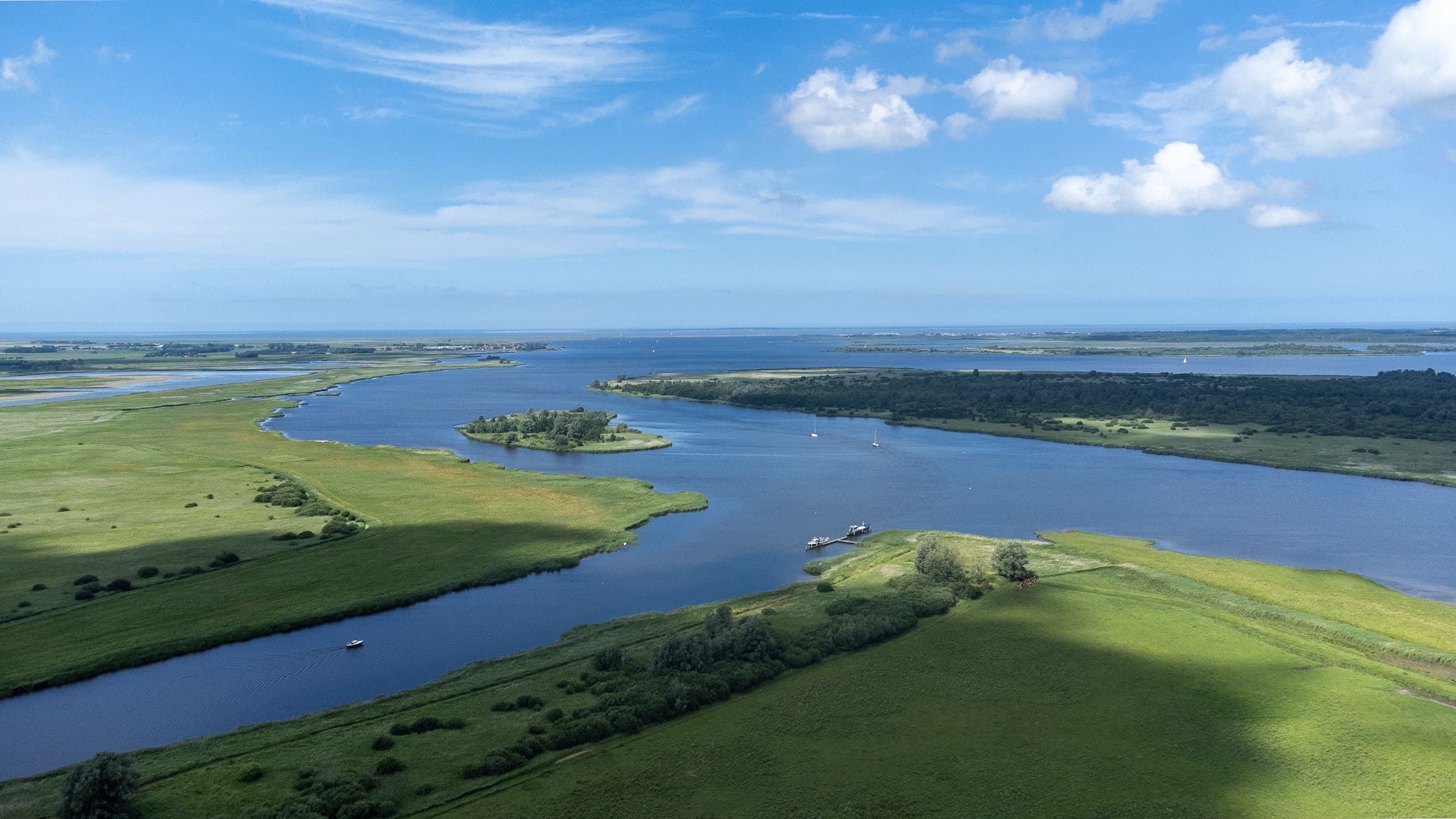
Waterscapes of the Netherlands belong to some of the most managed systems of their kind @rvbenemanuel
“What this kind of data shows,” Jimmy says, “is that fish don’t experience rivers in pieces. They experience them as one connected system.”
The study underscores the importance of thinking about connectivity at the scale at which fish actually move. Telemetry provides a way to see how local decisions can influence migration far beyond a single river stretch.
Seeing rivers through movement
Following river lamprey through managed rivers reveals more than individual migration routes. It shows how connectivity functions in practice within one of the most regulated freshwater landscapes in the world.
For Jimmy van Rijn, the value of this work lies in replacing assumptions with observation. By tracking fish as they move through real infrastructure under real operating conditions, the research provides a grounded view of how rivers are actually experienced by the species that depend on them.
The river lamprey study demonstrates how applied telemetry can reveal connections, surprises and vulnerabilities that would otherwise remain hidden. It is not just about where fish go, but about how we understand the systems they move through.
Acknowledgements
This study is part of a broader programme of applied freshwater research carried out by Jimmy van Rijn and his colleagues (Jeroen Huisman and Joop van Eerbeek), part of the Coastal & Marine Systems research group at Van Hall Larenstein University of Applied Sciences. Their work is conducted as part of the Vissen voor verbinding project, funded by the Waddenfonds — a collaborative effort alongside partners including the Sportvisunie (and its regional branches for Fryslân and Groningen-Drenthe), the Waddenvereniging, Staatsbosbeheer, Waterschap Noorderzijlvest, Prolander, and the Province of Groningen.
Researcher
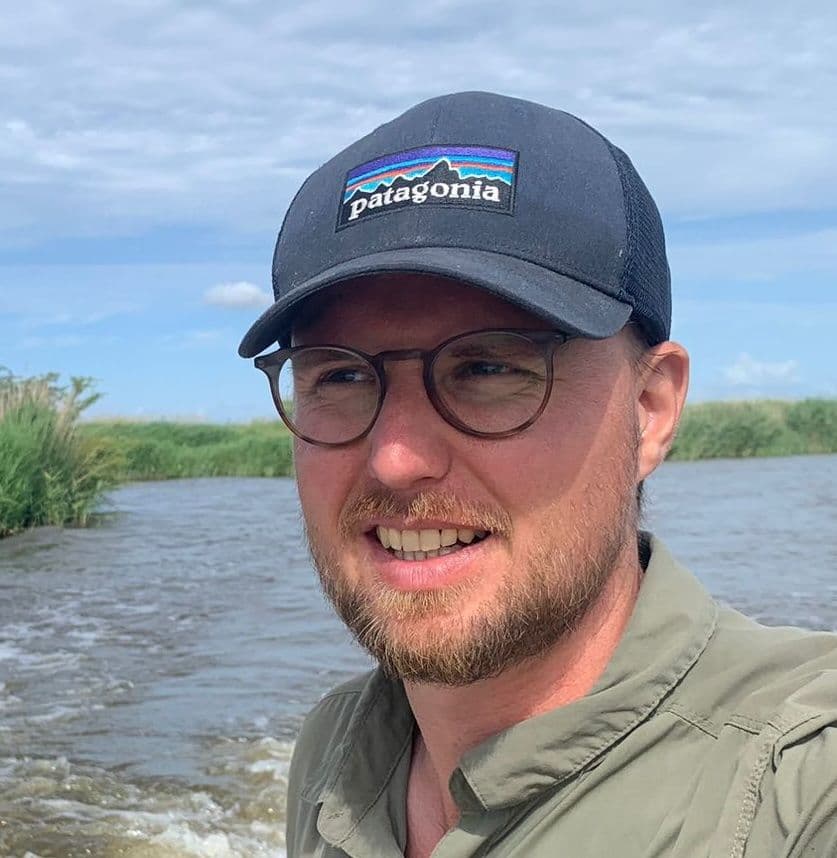
Jimmy van Rijn is a freshwater ecologist specialising in fish movement, restoration and connectivity in regulated river systems. He is part of a small freshwater team - alongside Jeroen Huisman and Joop van Eerbeek - within the Coastal & Marine Systems research group at Van Hall Larenstein University of Applied Sciences. Their work focuses on acoustic telemetry, behaviour around infrastructure, and understanding how fish respond to real-world water management conditions.
(Links to ResearchGate, LinkedIN, Orcid)
Thelma Biotel’s Role
Acoustic tags
Choosing the right tag is an important part of working with different species, sizes, and study objectives. Explore Thelma Biotel’s acoustic tags for fish movement and behaviour studies.
Link to acoustic tags
Acoustic receivers
Once tagged fish are back in the river, receivers provide the other half of the picture - detecting their movements through migration routes, barriers, and study areas over time. Explore Thelma Biotel’s acoustic receivers.
Link to acoustic receivers